What is Paragraph?
Paragraph is a publishing and newsletter platform that helps writers and companies publish posts, email them to subscribers and grow an audience. It started as a publishing tool popular with crypto and web3 communities, where readers can support writers onchain and subscribe with a wallet as well as an email address. Publications can use custom domains, themes, SEO settings and imports from other newsletter services.
In 2026 Paragraph relaunched as an AI-native product. It now offers an agent that drafts posts in a company's voice using notes and product docs, turns one idea into blog, email and social content, and refreshes older posts, with nothing published until a person approves it. Teams can work with it through an API, MCP server, CLI and Slack or Telegram bots, and a free tier is available without a credit card.
Paragraph at a glance
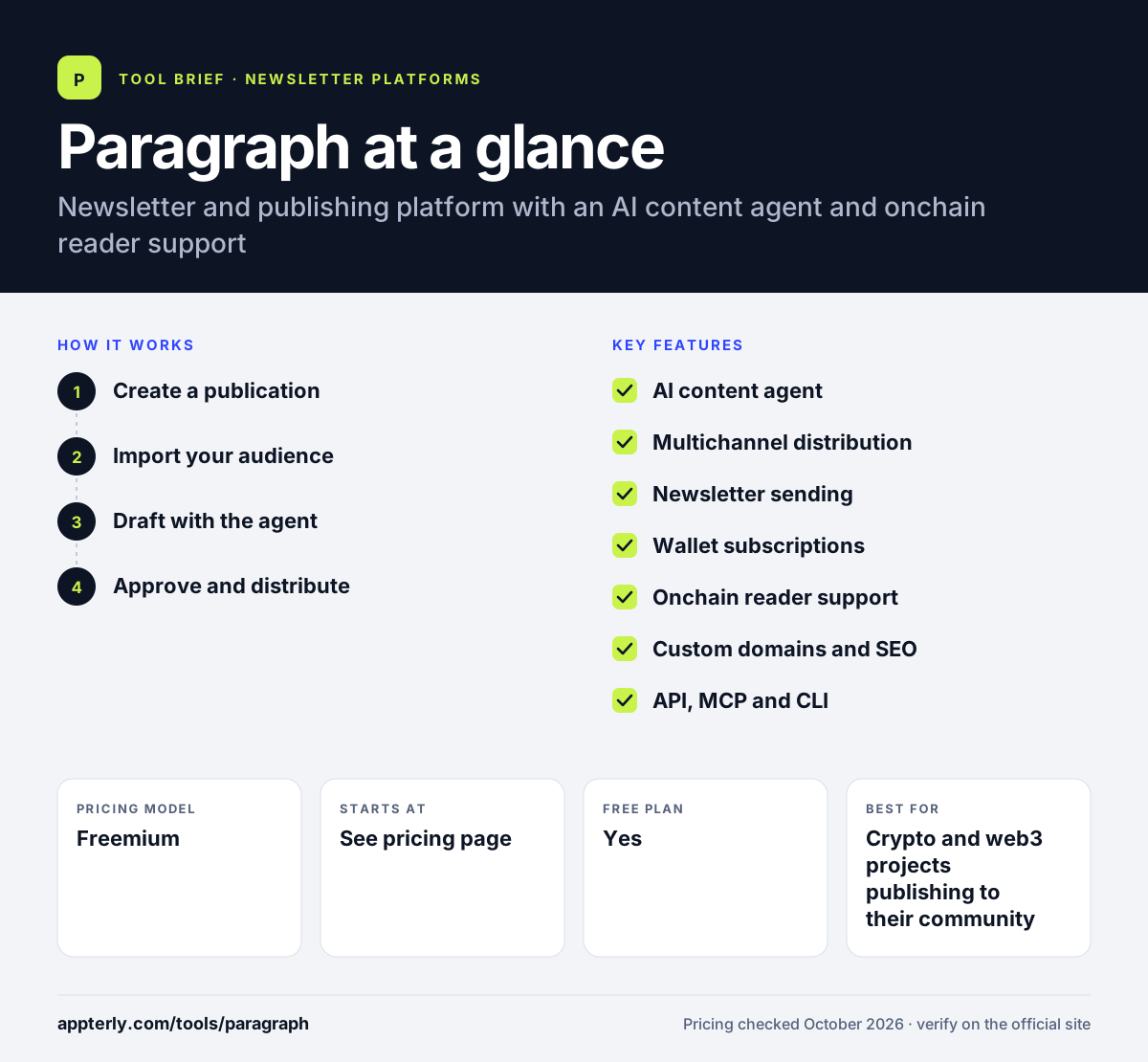
How does Paragraph work?
- Create a publication
Sign up for free, set a name and theme, and connect your own domain if you have one.
- Import your audience
Upload subscribers by CSV or import existing posts and subscribers from another platform.
- Draft with the agent
Give the agent context such as founder notes and product docs so it can draft posts in your voice for review.
- Approve and distribute
Approve a post, then send it as a newsletter by email, to wallets via XMTP and across other channels.
Paragraph key features
AI content agent
Drafts posts and pages in your brand voice and suggests updates to older content.
Multichannel distribution
Turns one idea into blog, newsletter, email and social versions.
Newsletter sending
Email posts to subscribers, with communities and segments to target specific groups.
Wallet subscriptions
Deliver post previews to crypto wallets through the XMTP messaging protocol.
Onchain reader support
Readers can support writers with coins and remix posts as an alternative to paywalls.
Custom domains and SEO
Host the publication on your own domain with themes and search settings.
API, MCP and CLI
Connect Paragraph to AI clients and internal tools, and use Slack or Telegram bots.
Why use Paragraph?
- A free tier lets you start publishing without entering a credit card.
- The AI agent can cut the time it takes to keep a company blog and newsletter active.
- Approval steps mean nothing goes live without a human check.
- Wallet subscriptions and onchain support reach crypto audiences that other newsletter tools ignore.
- Imports and custom domains make it easier to move an existing publication over.
Who is Paragraph best for?
A good fit for
- Crypto and web3 projects publishing to their community
- Startups that want an AI agent to keep content flowing
- Writers who want onchain reader support instead of paywalls
- Small marketing teams that repurpose content across channels
Less suited to
- Writers who want a classic paid subscription paywall
- Teams that need clear published pricing before signing up
- Marketers looking for advanced email automation and ecommerce flows
Paragraph pricing
| Pricing model | Freemium |
|---|---|
| Free plan | Yes |
| Free trial | Not confirmed |
| Starting price | See the official pricing page |
Paragraph offers a free tier with no credit card required and a demo option for teams. Paid plan prices were not visible on the official site when checked.
Prices checked October 2026. Vendors change plans often, so confirm on the official website before you buy.
Paragraph pros and cons
Pros
- Free tier with no credit card
- AI agent drafts and maintains content with human approval
- Unique onchain and wallet delivery features
- Strong developer access through API, MCP and CLI
Cons
- Paid pricing is not clearly published
- Recent repositioning means features are still changing
- Onchain features matter little to non-crypto audiences
Paragraph integrations and platforms
Works with
Available on
Paragraph alternatives
See the full shortlist in Best Newsletter Platforms.
Paragraph FAQ
Is Paragraph free?
Yes, Paragraph offers a free tier that you can start without a credit card. The company also offers demos for teams that want more help. Paid plan prices were not listed on the official site when this page was checked, so contact Paragraph or check inside the app for current upgrade costs.
What is Paragraph used for?
Paragraph is used to publish posts, send them as newsletters and grow an audience. Since its 2026 relaunch, companies also use Paragraph's AI agent to draft posts in their own voice, repurpose content for email and social, and refresh older articles. Crypto communities use it for wallet subscriptions and onchain reader support.
Paragraph vs Substack: what's the difference?
Substack centers on paid subscriptions, takes 10% of that revenue and offers a large reader app. Paragraph avoids paywalls, offers onchain reader support and wallet delivery, and adds an AI agent for drafting and distributing company content. Substack suits independent paid writers, while Paragraph leans toward startups and crypto communities.
Does Paragraph support custom domains?
Yes. Paragraph lets you run a publication on your own domain, along with themes, SEO settings and email deliverability tools. You can also import posts and subscribers from other platforms, including CSV imports, which makes it practical to move an existing blog or newsletter over.
Sources
This overview is based on Paragraph's official website and documentation, checked October 2026.